This story is contributed by Lammert de Wit.
- Since peak energy usage occurs in the evenings, much of the solar energy produced during the day needs to be stored for later consumption.
- A salt-based thermal battery that stores heat and cold temperatures for building climate control offers an efficient and inexpensive solution for the storage of thermal energy.
- Transmission losses are avoided because the energy is produced, stored, and consumed locally, and conversion losses are avoided because the solar energy is collected and used as heat.
Why Energy Storage
To halt the abuse of our planet’s scarce resources, we need to start using renewable energy in a sustainable way. This requires radical changes to our energy systems and new solutions to enable this transition, such as decentralizing our energy production and storage. Local energy generation, local storage, and local use offer ownership over energy resources to the individual while minimizing transmission losses.
Energy storage is essential to enabling the large scale adoption of renewable energy. To understand what makes storage efficient and sustainable, let’s consider the following questions.
What kind of energy is being consumed?
When it comes to energy consumption, most people think of electricity, but a large fraction of energy use is actually attributed to building climate control. Calculations show that between 45% (for well-insulated buildings) to 70% of the total energy consumption of buildings in the Netherlands is related to heating and cooling. Given these numbers, heating should be stored for direct use and cold temperatures can be stored for cooling, which will be in demand with rising temperatures around the globe. Storing cold temperatures and heat makes it possible to decouple thermal energy consumption from generation and to take full advantage of solar energy when it is available.
What kind of renewable energy is available?
Solar and wind are the most common sources of decentralized renewable energy, but small-scale hydro and waste heat from industrial processes can also be considered. While sunlight itself is cheap and abundant, making this energy available for consumption on demand is still a challenge. Peak solar generation occurs midday while peak energy consumption occurs in the evenings and, without some form of storage, that excess energy cannot be saved for use later in the day.
What is the most efficient and sustainable storage?
Energy is lost with every energy transfer or conversion, so it is generally more efficient to store energy in the same form in which it is to be used. Ideally, the sun’s heat should be stored directly for heating and cold temperatures during the winter can be stored for cooling, especially since heating and cooling form the largest percentage of energy consumption in buildings. In contrast, photovoltaics are typically able to convert only 20% of solar energy into electricity, which is then subject to additional losses in transmission and storage (although that electricity can then be used for many applications including heating and cooling).
Finally, these systems all need to be connected in an efficient way in order to optimize energy systems as a whole.
The Thermal Battery Solution
Excess energy generated by photovoltaics during the day is currently dumped on the grid, causing problems for grid operators. At the same time, peak power demands in the evenings typically cannot be met by renewables. To prevent this imbalance between supply and demand, sustainable energy storage is needed.
One option is to store that excess electricity as heat by using a heat pump to transfer that energy into a THAC thermal battery. This allows energy generated in the middle of the day to be used for heating in the evenings and early mornings. For stationary storage applications, there is greater flexibility in terms of size and weight, and thermal energy storage avoids the use of limited mineral resources, such as lithium and cobalt.
Heat Pipes for Solar Thermal
Instead of photovoltaics, SuWoTec uses heat pipes to collect thermal energy from the sun. SuWoTec’s HeCo heat pipes consist of a vacuum-sealed glass tube with a copper tube at the center. Sunlight, especially the infrared part of the spectrum, is absorbed by the copper tube, which boils a volatile fluid that conveys heat to the top manifold, where the fluid condenses and water is heated to 80–100 C. This hot water can then be pumped to the thermal battery, “charging” the battery, or routed elsewhere to be used immediately for heating.
Systems using HeCo pipes recover more energy per square meter than photovoltaic panels, albeit as heat energy as opposed to electricity. By adding a special coating to the mirrors behind the heat pipes that selectively reflects the infrared spectrum, SuWoTec has been able to achieve maximum temperatures of 100–120 C, compared to 70–80 C in typical solar water heating systems. In addition, the cool Dutch evenings allow the recovery of cold temperatures, and both heat and cold can be stored in the THAC thermal battery system.
SuWoTec is currently working on the next generation of HeCo pipes, which will allow water to be heated to 30 C in an ambient temperature of -10 C during the day (even when overcast or cloudy) and cooled to 10 C in an ambient of 40 C, which would obviate the need for air conditioning systems.
THAC Thermal Battery
When it comes to thermal energy storage, the image that typically comes to mind is a large tank of fluid, like a water heater. A thermal battery does not need to contain fluid, but rather, any material with a large capacity for storing heat or cold will do. These materials fall into several categories:
- Thermochemical materials (TCM) absorb large amounts of heat via a chemical reaction, but sustainable solutions are not yet available.
- Phase change materials (PCM) change phase from solid to liquid (ice to water) or liquid to gas (water to steam) when heated, storing a lot of thermal energy in the process.
- Sensible heat storage materials (SHM) are simply able to store a lot of heat for every unit increase in temperature. While salt has a lower heat capacity, it can store more heat per unit volume than water. Salt is currently used in the THAC thermal battery because it is sustainable, safe, and easy to manage.
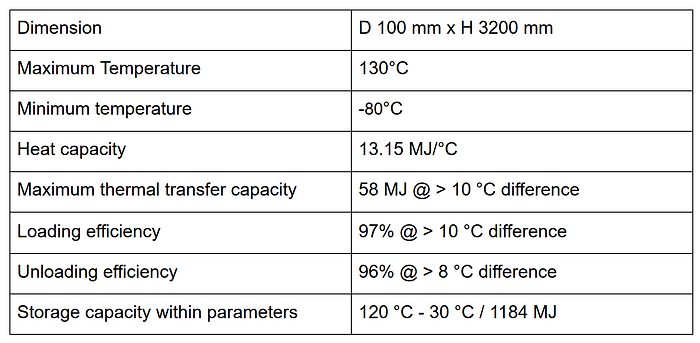
The THAC is thermally insulated and capable of delivering hot water in temperatures ranging from a minimum of 30 C to a maximum of 98 C for building use or up to 220 C for industrial use. Thermal energy can be stored for up to 3 months with a roundtrip efficiency of around 97%.
If both heating (from the sun or industrial processes) and cooling (from a local river, well, or other cold sources) are needed, they must be stored in separate THAC units. Efficient use of heat and cold requires separate loops for circulating hot and cold water through the heat exchangers.
Integration with Climate Control System
Because energy storage is sustainable only if the energy is being used efficiently, SuWoTec designs complete systems to optimize climate control, from individually controlled rooms to humidity systems inspired by nature and enhanced air filtration, a necessity in times of COVID. Sophisticated controls are used to predict energy supply and consumer demand based on weather patterns.
In its current state, it is typically economical for SuWoTec’s temperature control system to provide for 80% of a building’s energy consumption in a Dutch climate, so additional heat pumps may still be necessary for backup. The schematic below describes one of these systems.
SuWotec’s climate control systems have been used in churches, libraries, classrooms, swimming pools, and houses. It is ideal for buildings with limited grid capacity, such as protected historic buildings with poor insulation. For a building complex in Rotterdam, the natural gas consumption was reduced from 39,000 cubic meters to zero and electricity consumption was reduced by more than 50% without compromising comfort.
Cost of Storage
The cost of energy storage includes installation, maintenance, and the savings from reduced grid consumption. Like solar panels, heat pipes require rooftop installation. The cylindrical THAC thermal battery, which has a height of 3.2 meters and a diameter of 1 meter, along with pumps and valves must be located in a boiler room or a container onsite. The thermal battery can then be connected to existing heating systems like floor heating or radiators, although full integration with a heat exchanger and hot and cold transport lines is ideal.
At € 50 per KWH for a thermal battery compared to around € 400 per KWH for an equivalent electrochemical battery, the thermal battery is a lot cheaper and has a 3–9 year payback period, depending on the energy use of the building.
Conclusion
By storing energy from the sun directly without extra steps for energy conversion, thermal energy storage can provide for a large portion of energy consumption in buildings. Thermal energy storage is ideal for larger buildings, communities, or district heating and can provide a good ROI at a much lower cost compared to electrochemical batteries while reducing consumption of grid electricity and improving climate control and comfort indoors.
Lammert de Wit is a 54-year-old Dutch entrepreneur who spent 30 years performing complex repairs on wells worldwide in the oil and gas industry before seeing the light and realizing the need to develop more sustainable solutions. Since 2016, he has been working with like-minded people at SuWoTec with the sole mission of developing solutions for a sustainable circular world.
The views and opinions expressed in this article are those of the author and do not constitute an endorsement or recommendation by the BatteryBits publication of the products described therein.
Interested in publishing in Battery Bits? Apply at this link to become a contributor.